Sacking DeHAG/IHAG 2013 --DIBP Crime Exposed
18.7.2023
DeHAG/IHAG 2013 SACKING--DIBP CRIME EXPOSED
Friends, We've been examining the history of DeHAG and trying to gauge how Labour and LNP have contributed to the demise of DeHAG/IHAG. As a by-product of this examination, certain political cover-up crime committed by DIBP in 2013 has been revealed. To understand this finding, you would need to access the following two crucial documents:
1. FOI Document released by the Department of Home Affairs on 11/2/2014 [#4] regarding the decision to disband IHAG (need to sift through all 14 pages!);
2. The Christmas Island Doctor's (CID) Letter of Concern dated November 2013 [#5] ( total 80 pages, will be making specific references );
Based on the above two documents, I concluded DIBP Secretary Martin Bowles and his associates had obstructed the CID's Letter of Concerns reaching up to the Minister of Immigration, the Hon. Scott Morrison. As such, Mr Martin Bowles may have committed the common law tort of misfeasance in a public office. He may therefore have committed a crime against the Commonwealth. Because of the nature of CID's Letter of Concern, he may also be liable for the covering up crime. I shall first outline the contents of CID's Letter.
THE CHRISTMAS ISLAND DOCTOR'S LETTER OF CONCERNS
The CID's Letter of Concerns was prepared at the request of the Medical Director of the IHMS and signed by 15 medical practitioners. The letter addresses, among other things, the DIBP's "rapid processing" in health screening procedure was not at the requisite Australian standards. The letter said, "... resulted in the abandonment of previously established standards to ensure unsuitable patients were not transferred to medically risky offshore facilities. Patients are ... cleared .. without pathology". The DIBP, through IHMS, forced the doctors to expedite the health screening process at a rate of 5 minutes per person, against the 20 minutes which would normally required. Section 4.0 (not made available to the public) listed individual cases that medical damages may have already occurred.
The doctors who performed medical assessments under rapid processing could not examine their patients using "reasonable skill and care" as prescribed by the law. The doctor who performed under rapid processing will violate the doctor-patient contract [#3] and, therefore, the doctor will be personally liable. The CID's Letter clearly states (See 3.2.5 Key recommendation(P) of [#5]):
=> .. no third party can absolve medical practitioners of their duty of care
[i.e. doctors are personally liable].
=> .. payment does not absolve medical practitioners of their duty of care
[i.e. doctors or IHMS cannot escape punishment by paying compensation if and when medical damages occur].
Therefore, the CID's Letter of Concerns is a report of crimes that have already occurred and also conveys warnings that such crimes will continue to occur. Both the administrators of IHMS and the authors of the Letter of Concerns have the legal rights and specific interests that the letter be reached to the Minister of Immigration for proper consideration.
MR. BOWLES ACTIONS TO SUPPRESS CID'S LETTER OF CONCERNS
The decision to disband IHAG, with former DeHAG members, was outlined in two departmental communications [#4]. The "Immigration Health Advisory Group Minbrief", released with exemptions, was authored and signed by Secretary Martin Bowles. The communication was approved and signed by the Minister on 19 December 2013. In that communication, Mr Bowles advised the Minister of timing "Please action by 15 December 2013, prior to your meeting with the Minister's Council for Asylum Seekers and Detention scheduled for 16 December 2013". That action aimed to exclude any advice from all former DeHAG members and effectively shut down the communication line created by Minister's Council for Asylum Seekers and Detention (MCASD). Ms Caz Coleman appeared not reinstated in the next phase of MCASD, as Dr Paul Alexander would replace the position:
"5. There is some crossover of relationships between IHAG members and the membership of your Council for Asylum Seekers and Detention (MCASD) ... [redacted] ... It would be valuable to continue to maintain a linkage between the independent health advice to the department and MCASD. Accordingly, you may wish to appoint Dr Alexander to the Council .."
There had been continued postponements for the quarterly IHAG meeting scheduled for 29 November 2013. These were signs of avoidance by DIBP [#7] and shut down communication from all IHAG members.
The second unsigned communication to Martin Bowles for decision, "Minutes -- Provision of Independent Health Advise", was dated 1 November 2013. That communication, reportedly, was consulted with Dr Paul Alexander, Dr Paul Douglas, and the FAS CCR (name not exhausted). First Assistant Secretary John Cahill signed and sent through Deputy Secretary Mark Cormack. It is not clear who authored that Minutes or whether any consultative meeting took place. But those names that appeared on the document would be able to tell about the source of that Minutes.
THE CID'S POTENTIAL FOR REACHING OUT
The tense relationship that's forming between DIBP and DeHAG/IHAG members has been fully described in this 2014 article by The Guardian [#7]. The relationship was even more tense after the August 2013 disagreement between IHAG members and the DIBP Secretary [#7] about the standard of healthcare required for asylum-seekers. After LNP Government came into power in August/September 2013, the next quarterly meeting for IHAG on 29 November 2013 was postponed. Regardless of these circumstances, if there were any opportunity, the IHAG members will certainly raise CID's Letter of Concerns to the DIBP most forthrightly.
The Ministerial Council for Asylum Seeker in Detention (MCASD) was in IHAG formal structure. Despite the name suggested, the MCASD wasn't within the inner circle of the Minister. MCASD doesn't have a close working relationship with either Minister or Departmental Secretary. Mr Paris Aristotle, the Chair of MCASD, disclosed this evidence at the 22-Aug-2014 Australian Human Rights Commission (AHRC) Inquiry in Canberra [#8]. Nevertheless, any critical information, such as CID's Letter of Concerns, that comes into the hands of the members of DeHAG/IHAG will likely be raised through MCASD.
Given the seriousness of the issues, the authors of the Letter of Concerns were likely to reach out to the members of IHAG. When IHAG visited Christmas Island Detention Centres in October 2013, none of the doctors working there could see IHAG. At 31/7/2014 AHRC Inquiry in Sydney, Dr Sanggaran gave evidence that:
"... whilst I was there, IHAG, ..., conducted a tour of Christmas Island detention centres. Now they came by after [inaudible], well after all the other doctors had gone home, they didn't speak to a single doctor in a clinical role, and I don't think it was IHAG's decision to do it that way. They were just kind of managed that way and at the time I was there, Grant was there, there were plenty of doctors there that had serious concerns about the health care at the time, but we only find out after they'd left that they'd been there at all."
Also to note, it is lawful for the CID to communicate to the members of IHAG in regard to the contents of the Letter of Concerns. Therefore, it is likely that by the time early December 2013, the members of IHAG became aware of the CID's Letter of Concerns.
ISSUES BUBBLED AND MEDIA HOT-AIRED
After disbanding IHAG on 13 December, the DIBP kept silent on the Letter of Concerns until the Guardian newspaper published the contents on 20 December 2013 [#10]. The Minister conceded DIBP had received -- probably through IHMS -- the Letter of Concerns on 6 December 2013 [#11]. Minister also suggested DIBP and IHMS were looking at the claims and the veracity of content and that the IHMS was 'expected' to resolve matters raised.
The IHMS, for its part, held a meeting with the signatories, and Dr Sanggaran was able to visit IHMS headquarters in Sydney. Otherwise, none of the issues has been resolved, as evidenced by Dr Sanggaran [#8]:
"So look, they [IHMS] called everybody that had signed the letter. We had a discussion with them about what they thought was significant. They made an invitation to come down to Sydney. I took that invitation, ..... I was able to discuss things with Dr Parrish and several others at the head office there. But in the end, there was no real resolution at all to any of the points that we had put forward."
Obviously, the Minister, DIBP and the LNP government were, in fact, ill-equipped to handle such serious and substantive issues. Failing to appreciate these are substantive legal issues, the LNP rank and file were expecting the matters to withered away with time.
MISFEASANCE OF PUBLIC OFFICIAL
The origin of this particular tort is punitive in rationale, with the government standing behind individual officers who may be sued. Its rationale has always centred on protecting the subject from government officers abusing power, but it doesn't prohibit the government from making a claim against its own public officials. The crime has the following elements:
(a) an act or omission by a public officer done:
(i) with intent to harm; or (ii) knowingly in excess of his or her authority; and
(b) involving a foreseeable risk of harm; and
(c) causing loss or damage.
In this case of DIBP Secretary suppressing CID's Letter of Concerns, the conduct is of both the 'act' and 'omission'. On the 'act' of removing members of IHAG, the Secretary has publicly admitted to his own decision [#12]. There's also Secretary and DIBP omission to "receive", "process" and "taken into account" of the CID's Letter of Concerns. The objectives of this 'act' and 'omission' were the Letter of Concerns not reaching the Minister, which is 'the damage'.
Friends, this is the specific area of common law that we haven't seen before. Its applicability might even extend to the recent Robodebt Scandals, where the Centrelink officers recklessly asked the unemployed to repay the debts that actually do not owe. On this note, I shall have to take a break from this offshore enslavement research and must attend my household DIY flooring chore for about 2-3 weeks.
-- Cheers, NetIPR.
9.7.2023
DeHAG WARNINGS ON COMPROMISED DOCTORS:
Friends, I call your attention to the 2012 report of the Joint Select Committee [#2], the Parliamentary Committee set up to investigate Australia's Immigration Detention Network. The report gives background to the 2005 Commonwealth government contracting out the management of immigration detention centres. The commencement DeHAG has been noted [#2]:
"1.27 The Detention Health Advisory Group (DeHAG) was established in 2006, following recommendations in the report by Mr Mick Palmer into the detention of Cornelia Rau. DeHAG provides advice to the Department of Immigration and Citizenship (DIAC) on detention health care policy and procedure.
1.31 DeHAG opposes mandatory restrictive detention, particularly of children, survivors of torture and trauma and other vulnerable individuals. Nevertheless, it believes that improvements may still be made even within the current framework."
MEDICAL ETHICS VS DOCTORS COMPROMISED POSITION
Last year, 2022, we had extensive discussions about medical malfeasance occasioning on offshore asylum-seekers [#3], interpreting these incidents as violations of asylum-seeker patients' inalienable (natural) human rights and the violations against doctors' medical ethics. The DeHAG already foresaw that and communicated to the Parliamentary Committee that such ethical violation would take place on current immigration detention:
=> 4.59 The concern about conflict of interest has also been expressed by DeHAG. The Chair of DeHAG, Professor Louise Newman, explained:
"I think the net result of some of these concerns is that the professional bodies—and this has been raised as well by all our groups and by the medical colleges and the AMA—are deeply concerned about the compromising position of professionals working within the system and the ethical dilemmas that this raises. Many of our member organisations are concerned that the professional people working within the system—be they psychologists, mental health nurses or psychiatrists—are intrinsically being compromised in that the system militates against them providing care in the way that they would expect to practise it. In fact, professionally, in terms of our ethical obligations—these are international standards of practice—we feel that currently it is very difficult to practise at the appropriate level."
A PSYCHIATRIST'S WARNING
In Submission 154 [#2A], a name withheld psychiatrist who worked for IHMS at Christmas Island Detention Centre was already warned about violating laws. She gave evidence to the Committee about her practical experience:
"I found this to be extremely restrictive and limiting on my practice as a psychologist. It was also unethical and impractical for the detainees, considering the way people experience a mental illness ...... it would have been negligent of me as a psychologist to have followed the advice of my supervisor and not treat PTSD if I saw it."
As a rule, the Healthcare providers -- i.e. Clinics, Hospitals, Contractors -- must prioritise the patient or "the client" under their care. The IHMS having a conflict of interest, i.e. given priority to DIAC, in carrying out its contractual duties being noted as:
" ... another systemic issue I found interfering with my work was the confusion over who was the client? In my experience as a psychologist ..... The client is the individual (sic. patient) who utilises the services of trained mental health professionals to address ... mental health problems. .... in my short experience working for the health service provider (sic. IHMS) ... it was immediately and sometimes blatantly obvious that the vulnerable people I saw in the counselling rooms were not regarded as "the client" by my employer(IHMS). To the health service provider (IHMS), their "Client" was DIAC -- the one who pays the bills. "
Therefore, it is clear that sufficient warnings have been given to the policymakers of Australian immigration detention about the inevitable violation of laws. The psychiatrist in the above note had communicated with the specific legal word "negligent", which should have raised enough attention. Specifically, when a doctor/psychiatrist cannot properly discharge their ethically bound duty, that doctor/psychiatrist will be medically negligent and violate common laws. Such a message is seemingly hard to ignore, and my only conclusion is that Australian policymakers have omitted the contexts to take into account.
IGNORING ENFORCEABLE RIGHTS OF ASYLUM-SEEKER PATIENTS
The policymakers have not considered that ethical issue raised by DeHAG in debating the "Migration Amendment (Health Care for Asylum Seekers) Bill 2012". The Bill digest just noted that there have been some ethical tensions in the Australian detention system and stated that [#1]:
"As part of the arrangements between DIAC and IHMS, asylum seekers on Nauru are able to request health care, but the satisfaction of any request requires approval by the IHMS Health Services Manager. Health Service Providers who are contracted to provide health care for IHMS are also able to refer asylum seekers for care, but delivery of this care requires approval by IHMS."
"There are also ethical tensions about the provision of care in an environment where the underlying cause for the problem is unlikely to be resolved or recommending treatments that are unlikely to be approved.This dilemma was raised by some of the medical professionals who had previously made recommendations for treatment for people in long-term immigration detention which were never implemented (under the Howard Government)."
Therefore, the debate's mood was that ethical tensions exist, but unnecessary to address them at "this point in time". Of course, in Australia, every person in the legal and medical professions knows in the event of medical negligence, the patient can sue the provider under common law (doctor, hospital, healthcare company etc). So too, an asylum-seeker who was occasioned by medical negligence could sue under common law. This presents as the "enforceable medical rights" of asylum-seeker patients. But the Australian detention policymakers have chosen to ignore such rights. Because practically impossible for a detained asylum-seeker, lacking knowledge and resources, to be able to launch medical negligence case against the doctor at the detention centre. This is the calculated omission by detention policymakers. On Nauru and PNG, the asylum-seekers were further removed from Australian common laws, where the healthcare providers have blatantly ignored these medical rights.
Friends, I would invite you to revisit "Doctor-Patient Contract in Common Law [#3]" further, which gives a more comprehensive discussion on this subject. -- Cheers, NetIPR.
2.7.2023
TIMELINE ON DISBANDING OF DeHAG (2012-2013):
Friends, I am looking into the detailed circumstances surrounding the complete disbanding of the Detention Health Advisory Group (DeHAG) in 2012-2013. In 2006, under John Howard's LNP government, the DeHAG came into operation. DeHAG is not a statutory body but just an independent group comprising experts with imminent medical backgrounds. It was instituted and operated under the Secretary of Immigration Department(s) (DIAC/DIBP).
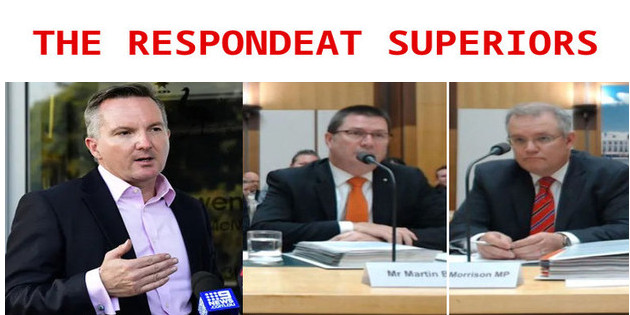
-> In August 2012, the Immigration Department Secretary, Martin Bowles, "restructured" DeHAG into IHAG (Immigration Health Advisory Group). The DeHAG members with proper medical expertise were "disabled" within the IHAG group. The Immigration Minister then was Chris Bowen of the Rudd/Gillard Labor Government.
-> In December 2013, the former DeHAG members were notified by Secretary Martin Bowles that their service was "not required". The Immigration Minister then was Scott Morrison of the Abbott LNP Government.
We must consider these events as 'pro-detention cohorts' efforts to remove independent health monitoring groups from the offshore/onshore detention processes. I refer "Pro-detention cohorts" here as the persons and entities supporting, participating, planning, or protecting the immigration detention industry. Look at Secretary Martin Bowles for example. He joined DIAC in March 2012. In August 2012, he made moves against DeHAG and replaced with IHAG. In December 2013, he ousted members of DeHAG/IHAG. We can reasonably conclude that he had the intention and participated in removing the independent oversight health expert body DeHAG from mandatory immigration detention.
However, we must remind ourselves about the limitations of the law. Within the scopes of Statutory Law and Common Law, a person who showed evil intention or participated in such conduct alone has not given sufficient ground to lay criminal charges. The law needs much more: concrete legal and factual connections that must be established between the victim(s) and such types of wrongdoers. The common law Respondeat Superior might be one way to address such situations. Otherwise, on prima facie evidence, Secretary Martin Bowles has done "nothing wrong" regarding removing the health expert body DeHAG, which had operated under his authority.
Anyway, the DeHAG existed for reasons since 2006. Even though DeHAG was merely an advisory group with no real authority, it helps prevent mandatory immigration detention from falling into the most egregious abusive situation that we had seen in cases like Cornelia Rau and Vivian Solon in 2001-2005. Removing DeHAG in 2012-2013 was totally unwise. We clearly see that mandatory detention, offshore at least, has now transgressed into a very serious crime -- the crime against humanity. On this crime, Australia must prepare to "reap" what her sons and daughters had "sowed".
DOCUMENTATION RE: DEHAG/IHAG
Notwithstanding above conclusion, in September 2012, Green Senators Di Natalie and Sarah Hanson-Young introduced a private member bill named "The Migration Amendment (Health Care for Asylum Seekers) Bill 2012". The Bill attempted to remedy the lack of independent oversight on mandatory offshore detention. The Senate Legal Committee inquired about DeHAG/IHAG, producing a final report but recommended that bill not be proceed.
At that inquiry, the former DeHAG members gave evidence about their experience working with Department and IHMS. The issues and obstacles DeHAG members had identified are fundamental and still remain today. I hope to talk more about these. The final report and Hansard transcripts are well worth browsing. -- Cheers, NetIPR.
REFERENCES:
[#1] Health Care for Asylum Seekers Amendment Bill DEC-2012
https://www.aph.gov.au/Parliamentary_Business/Bills_Legislation/bd/bd121...
[#2] https://www.aph.gov.au/Parliamentary_Business/Committees/Joint/Former_Co...
[#2A] 2012 JSCAIDN Sub. 154
https://www.aph.gov.au/DocumentStore.ashx?id=a89a0e3d-7523-4ad1-9ab7-f50...
DOCTOR-PATIENT CONTRACT (PART-1)
[#3] https://www.facebook.com/groups/1648810632007956/posts/3172047059684298/
https://www.aus4iccwitness.org/node/98
[#4] https://www.homeaffairs.gov.au/foi/files/2011-2014/FA131200545.pdf
[#5] http://www.aus4iccwitness.org/evidence/20131101_d4r-ci-letter.pdf
[#7] https://www.theguardian.com/world/2014/aug/05/-sp-australias-detention-r...
[#8] https://humanrights.gov.au/our-work/asylum-seekers-and-refugees/transcri...
[#9] https://www.sbs.com.au/news/article/asylum-seeker-health-panel-sacking-s...
[#10] https://www.theguardian.com/world/video/2013/dec/20/david-marr-scott-mor...
[#11] https://www.theguardian.com/world/2013/dec/24/morrison-christmas-island-...
[#12] https://www.sbs.com.au/news/article/asylum-seeker-health-panel-sacking-s... FOR UPDATES ( http://www.aus4iccwitness.org/node/108 )